5 Beach Model Horse Photography Tips and Tricks!
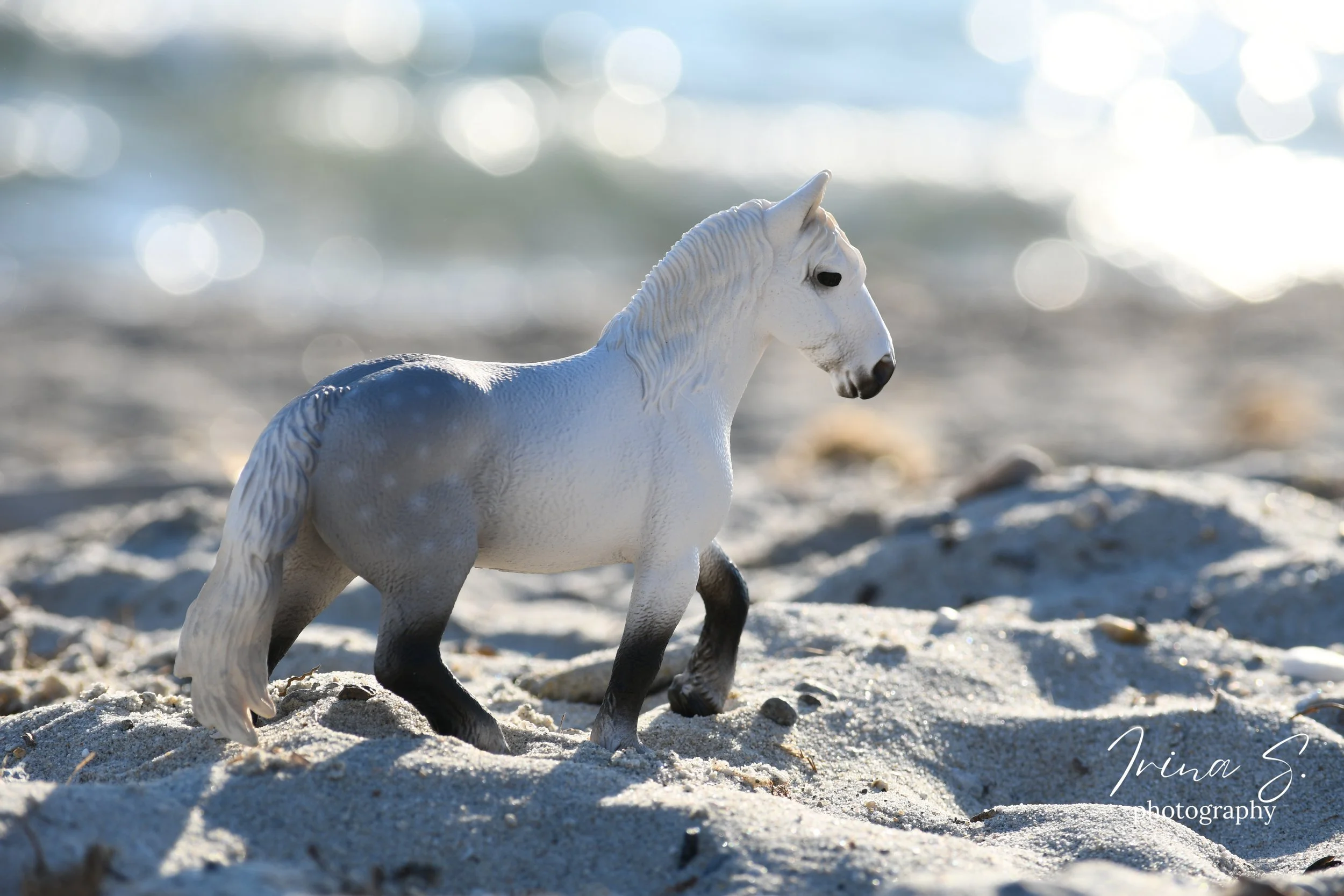
The sea is whirling about at your footsteps as you lean down, elbows touching the sand and pebbles, camera pointed at something tiny. With your face up against the view finder, you bob the lense up and down in search of your subject. You catch a glimpse of your model when, ah! The sea swings forth claiming dominion and knocking over the perfectly aligned model horse you had in front of you.
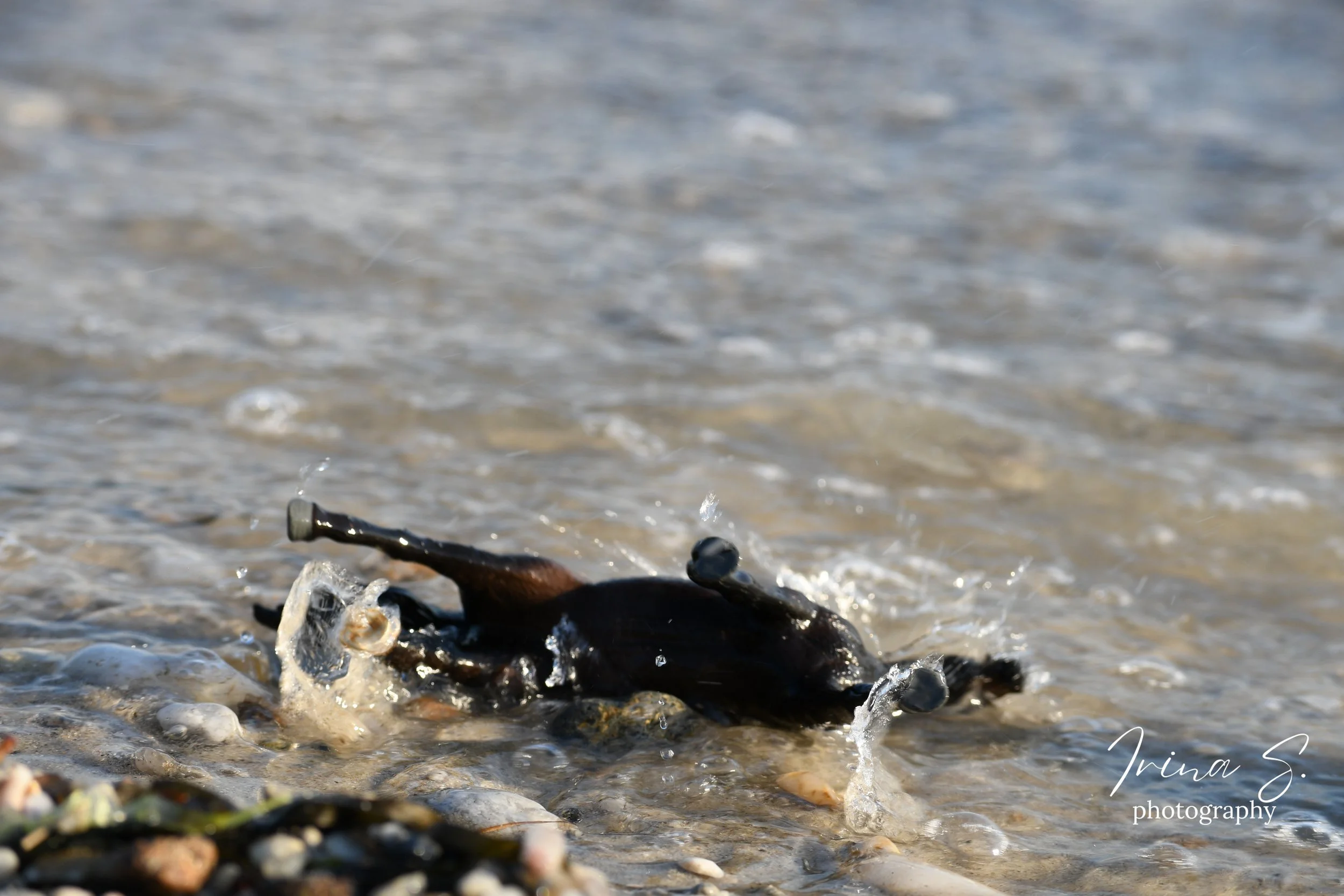
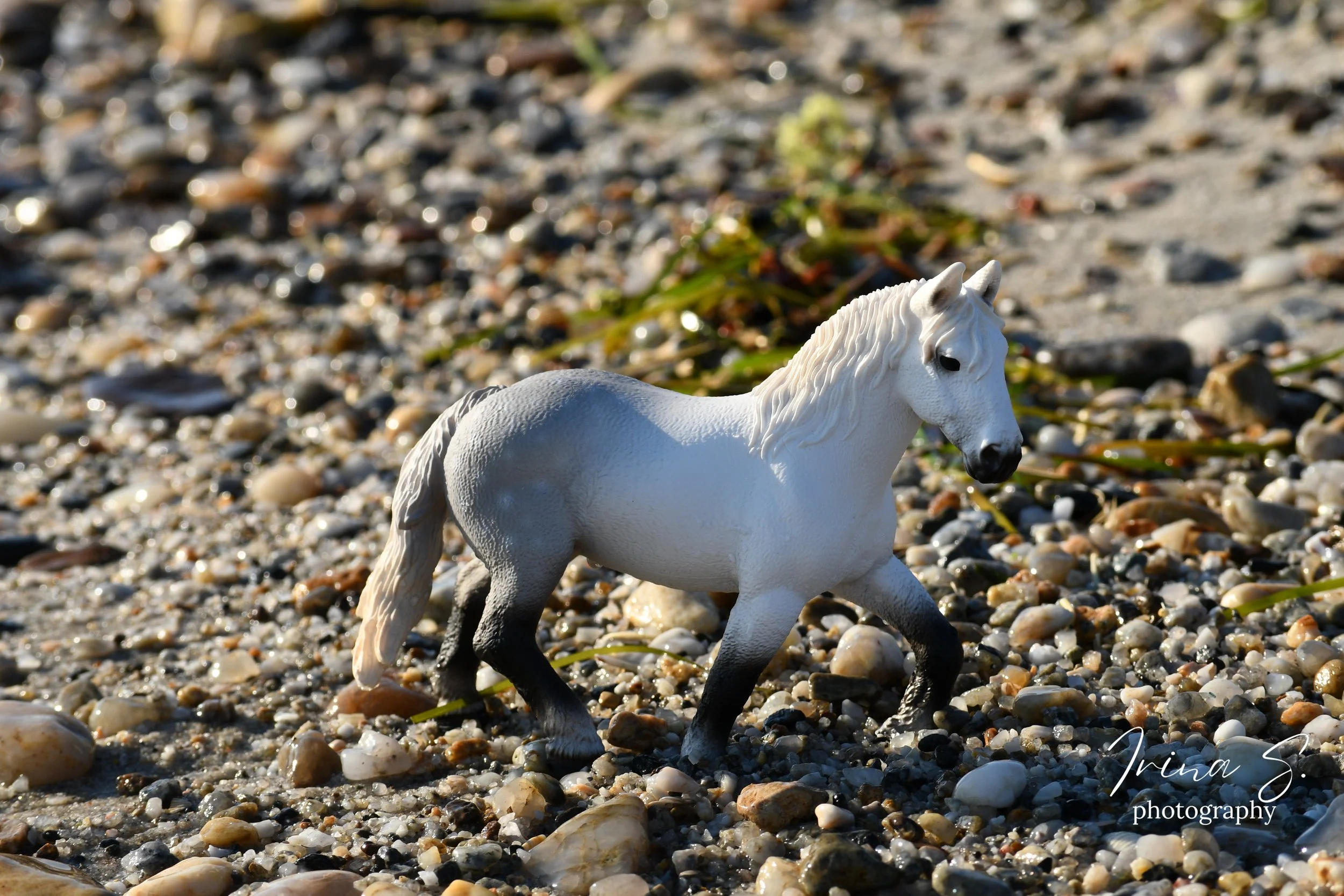
Two bad examples above, the one on the right simply has too much texture going on.
We all know the struggles of photographing your model horse at the beach, so here are 5 tips and tricks for getting the perfect shot!
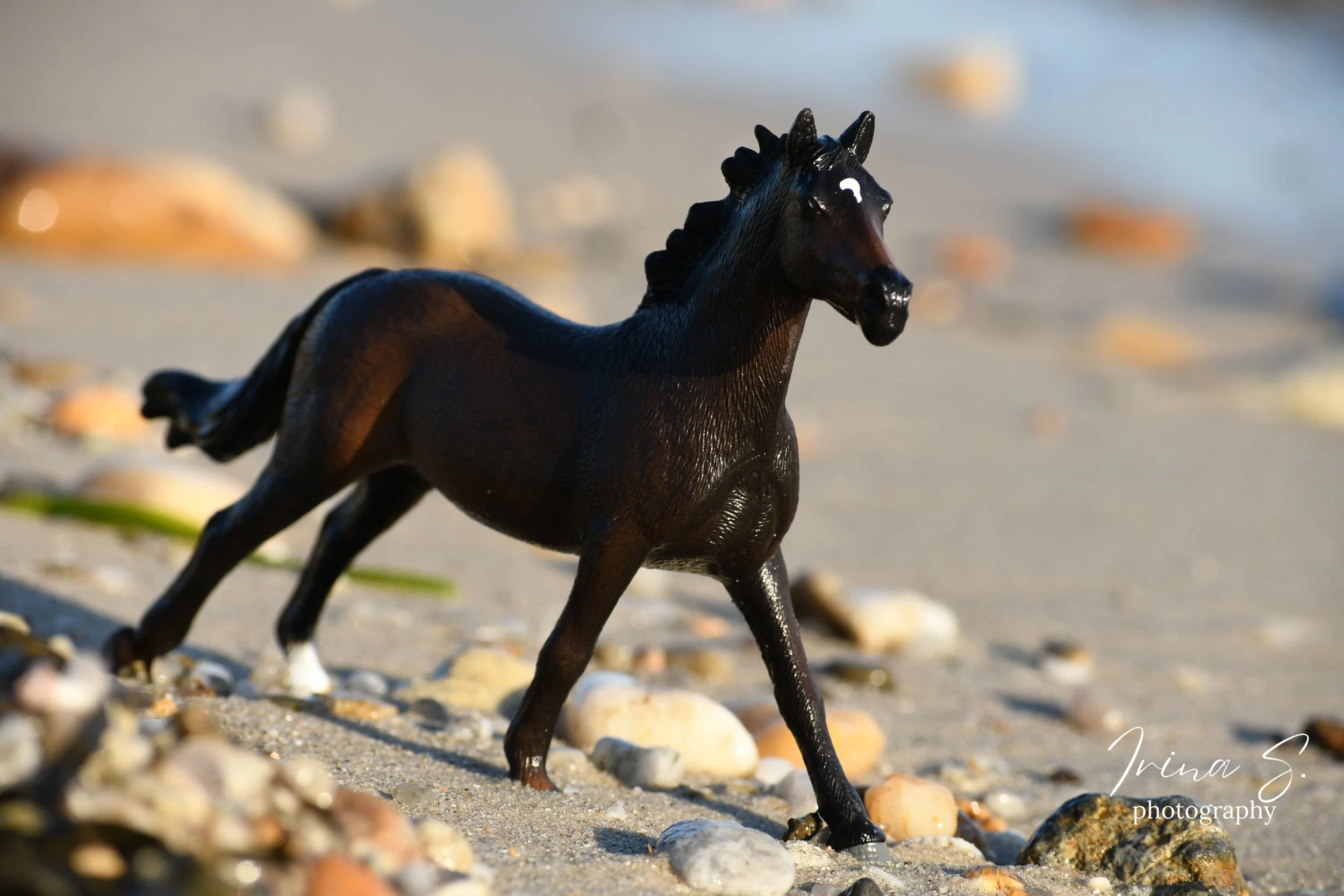
Hooves sinking. Sometimes the sand in a particular area can be very soggy or very compact, and that affects how much your model horse sinks into the sand. Your model’s weight should also be taken into consideration, because for some shots the sinking can create depth and realism (generally when sinking is minimal and does not rise far beyond the coronary band/crest of the model’s hooves), or it can totally throw off your shot (when the sinking is above the pastern or even up to the hocks).
Live view. If your camera allows it, or even has an extendable screen, I would highly recommend using live view mode when you otherwise would have to lie on the sand to use the view finder. This is something that can easily slip our minds, especially when we get caught up in the details. It happened to me on this shoot too, but luckily my friend’s dad, who is also a photographer, pointed it out :D
Positioning. I find it best to place your model at the midpoint between the shoreline and the sea. The place where the waves come and go, and there is no constant water. This is best for photographing models near the sea as you can get variety in the force with which the waves come, and kind of control how much water is in the frame when shooting.
The beach but there’s no water… Photographing model horses at the beach doesn’t always have to involve the sea. Although it is most favorable as a background if not the focal point, the water can be replaced by a backdrop of sand dunes, distant mountains, colorful blurred out umbrellas, or even seaweed. Seashells and pebbles also make great foreground elements!
Watch the white. Highlights often come into play because the sea tends to reflect a lot of the sunlight. Make sure these highlights are not over exposed either by trying to minimize the amount of reflections you have in the photo, or simply by toning them down in the editing phase.
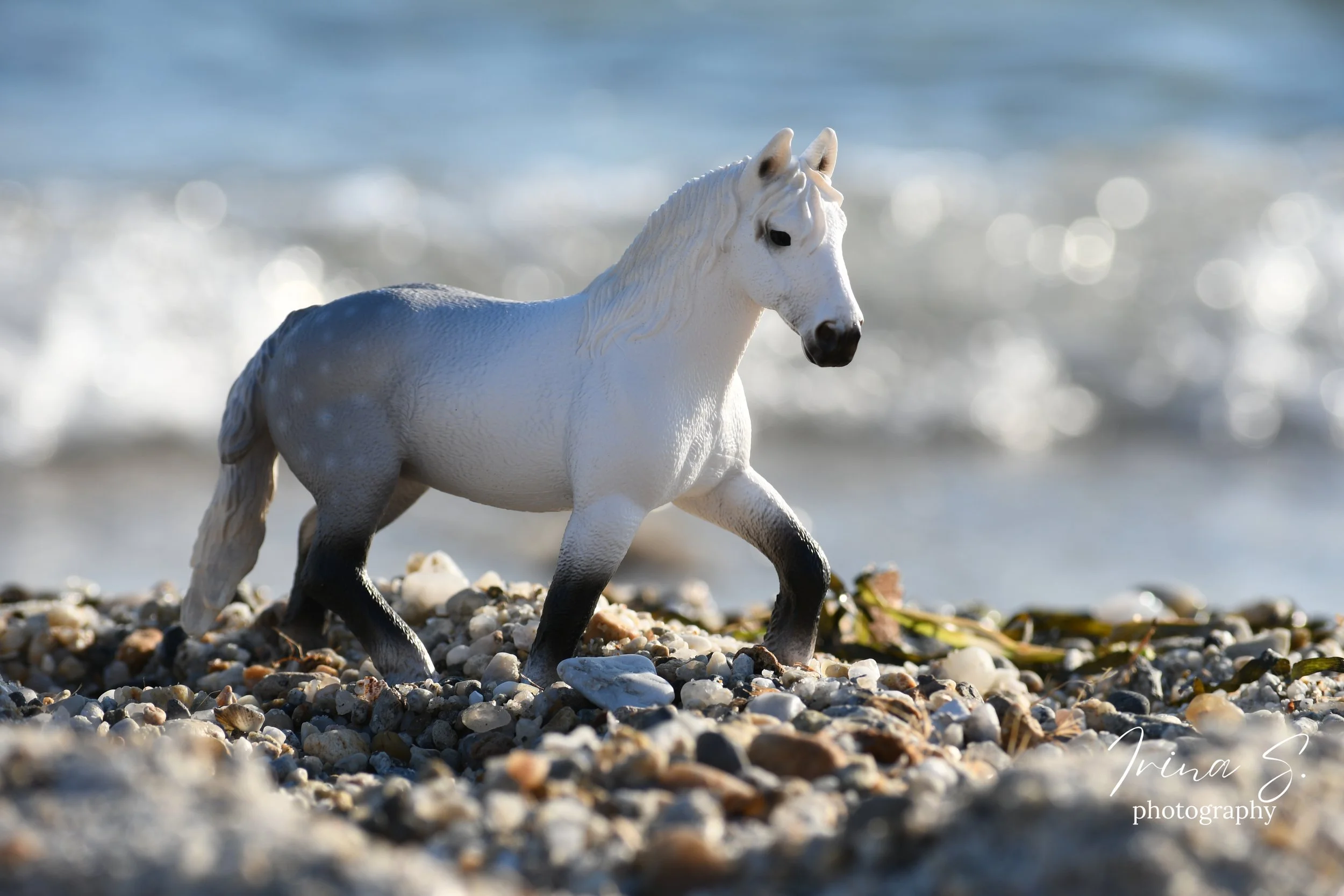
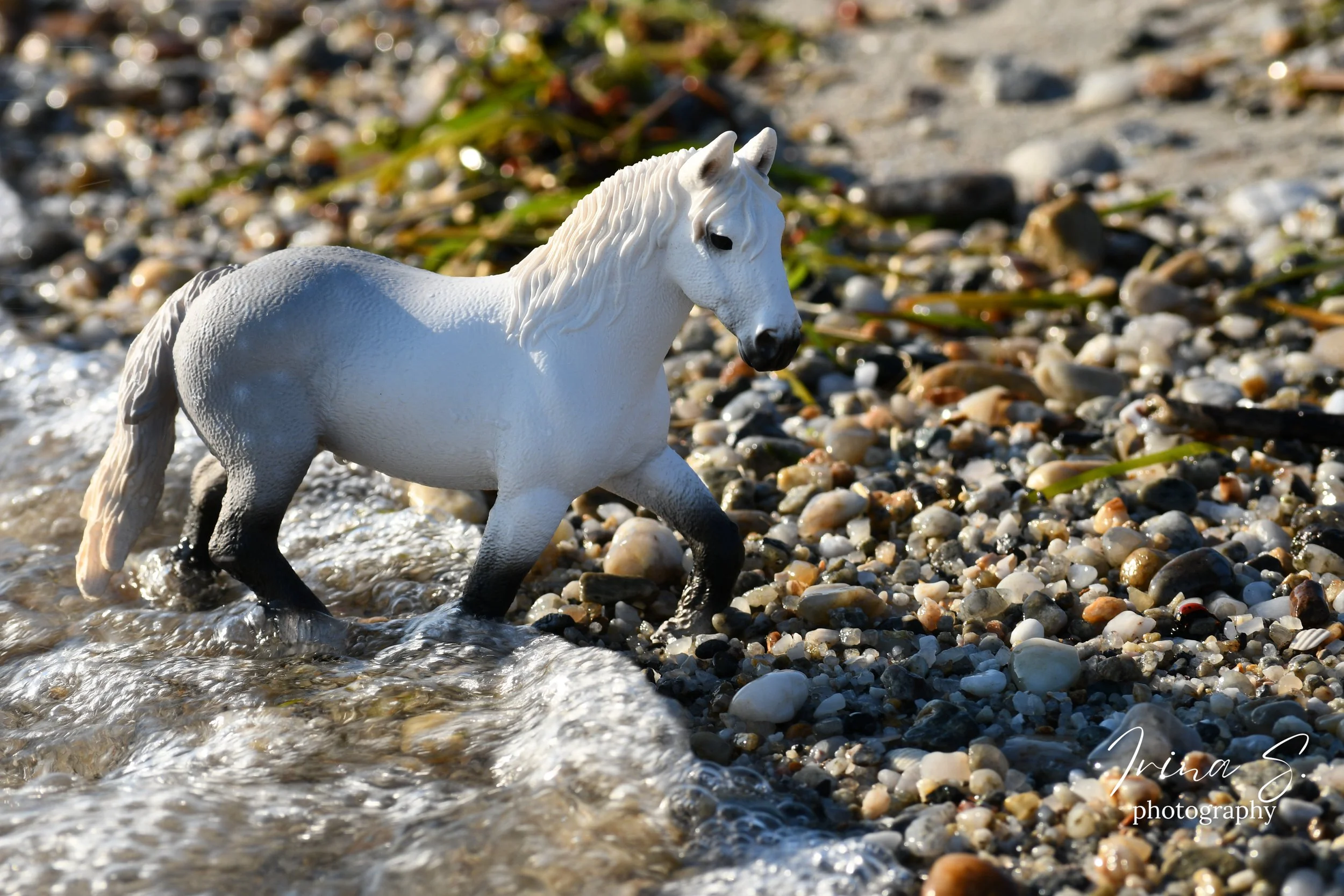
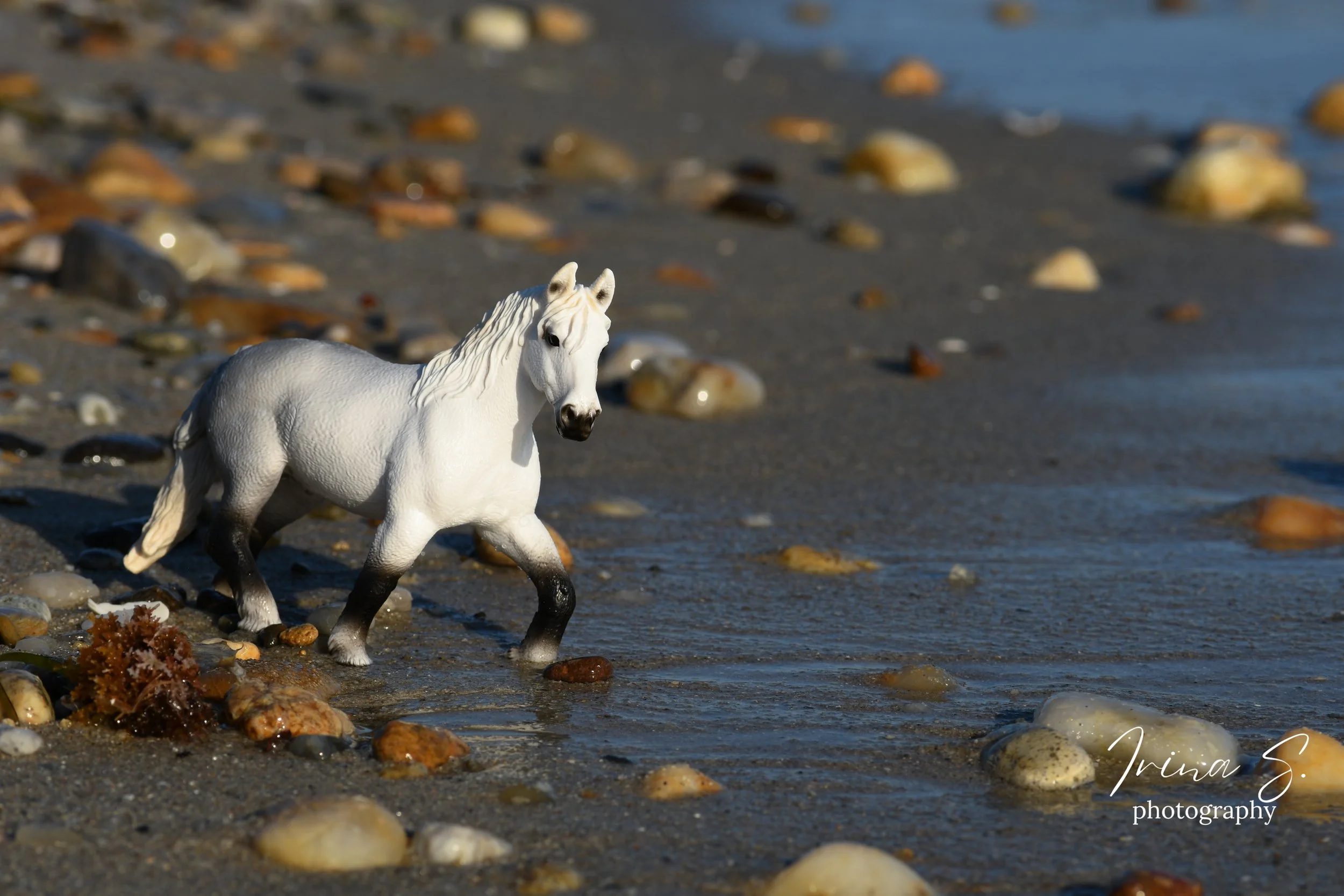
Thank you for reading and I hope you found this post helpful for your next photoshoot! Make sure to visit my store where I list all my custom model horses, and to sign up for the newsletter in the box below to satay up to date!