
How I Manage my Model Horse/Studio Purchases!
Hello everyone!
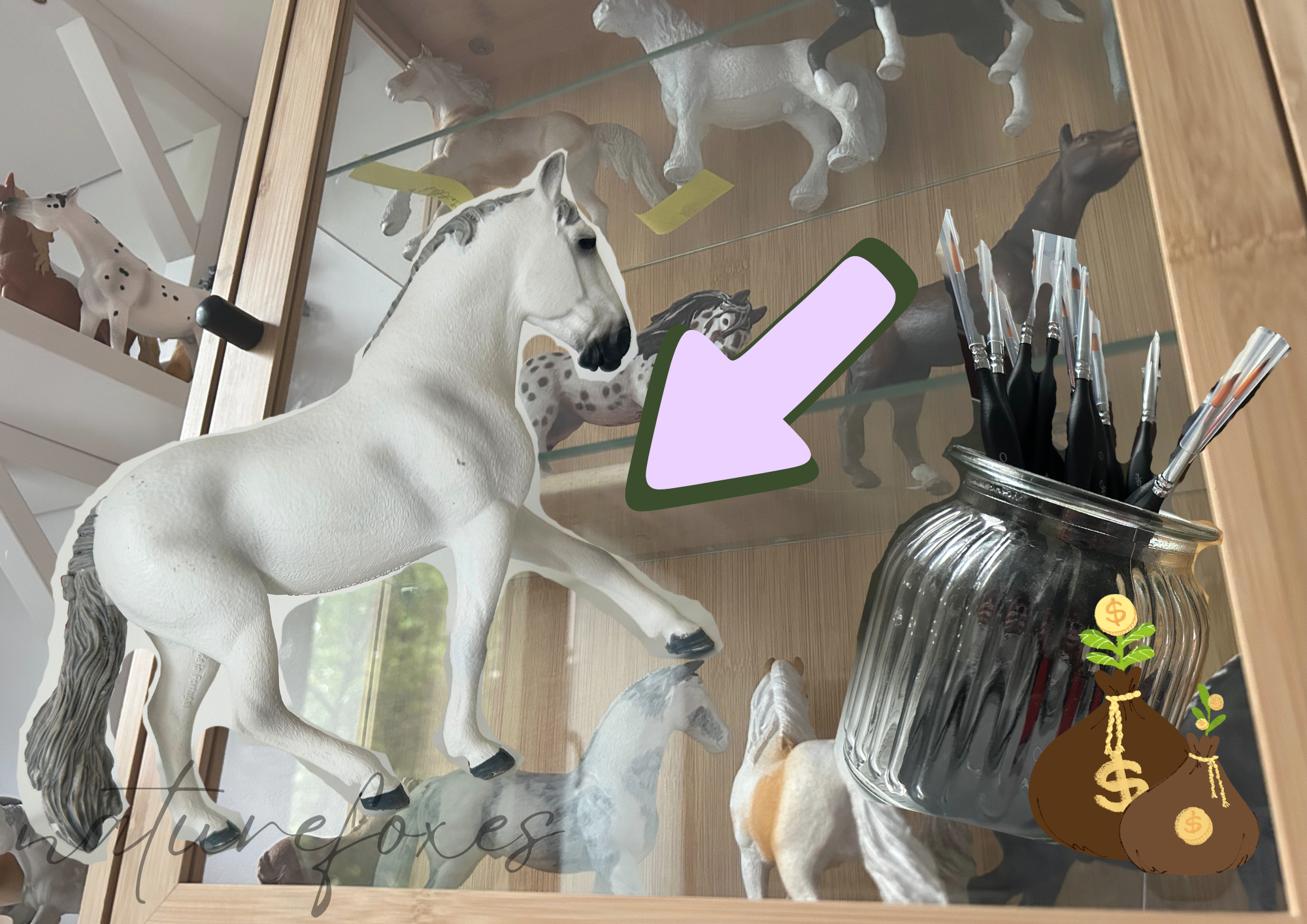
This week I thought I’d talk a bit about how I’m able to run my model horse studio and model horse collection by efficiently managing the horses and supplies needed. Over the years I’ve found that it is key to plan ahead, and that directly translates to how my studio purchases are structured. I aim to balance my personal collection and my studio’s collection of models and customs.
I keep track of everything on my own, but a grate way to remember your studio investments and expenses is to write them down on paper or in a notebook. Because I customize model horses, I need to purchase bodies (horses to work on). These models usually come second hand, or sometimes new, but I always plan ahead in terms of quantity and a price range, which significantly differs from lot to lot. Recently, I’ve focused on bringing a few more statement pieces to my personal collection (which I treat very differently than the studio’s collection), such as models that I can potentially show, resins, more expensive horses, and even specific models for customs that I will be keeping. I can definitely say that my collection acquires horses at a much slower rate and I guess that’s a good thing. The studio always has horses in and out, and models on stand by rotating from bodies, to prepping, to in work models. These past few weeks, the studio has gained a lot of horses and I’m now good to go at least for a while in terms of models.
As always, the search never ends when it comes to scouring the model horse market. I’m constantly on the look out comparing prices and deals and searching for special models. When I happen to find a model I’m interested in and wish to buy, I will always try to slot it in with some of my other purchases. Not as in time frame, but grouping them together in my brain helps me avoid constant buys and leave large enough gaps between lots. In other words, I will not be buying two expensive horses one after the other. Each purchase has a purpose and my categories and criteria are always rotating. That way nothing gets left out. Another big part of this studio is its general expenses. Art supplies, sealant, and generally just a lot of oddities that I happen to run out of.
If I had to define my system I would call it a “Rotating Acquiry System”. Each one of my sections gets its turn, the studio horses, my collection, and supplies (even if my collection gets skipped regularly).
I hope this was maybe helpful if you are also looking to organize the way you purchase model horses or maybe it was simply interesting to see a glimpse of what its like being a model horse artist :D
By signing up to the newsletter you get early notice for exiting and secret projects! It only takes an email:
