
Guide to Resin Model Horses! Buying resins, Choosing sellers, different resins, what I know
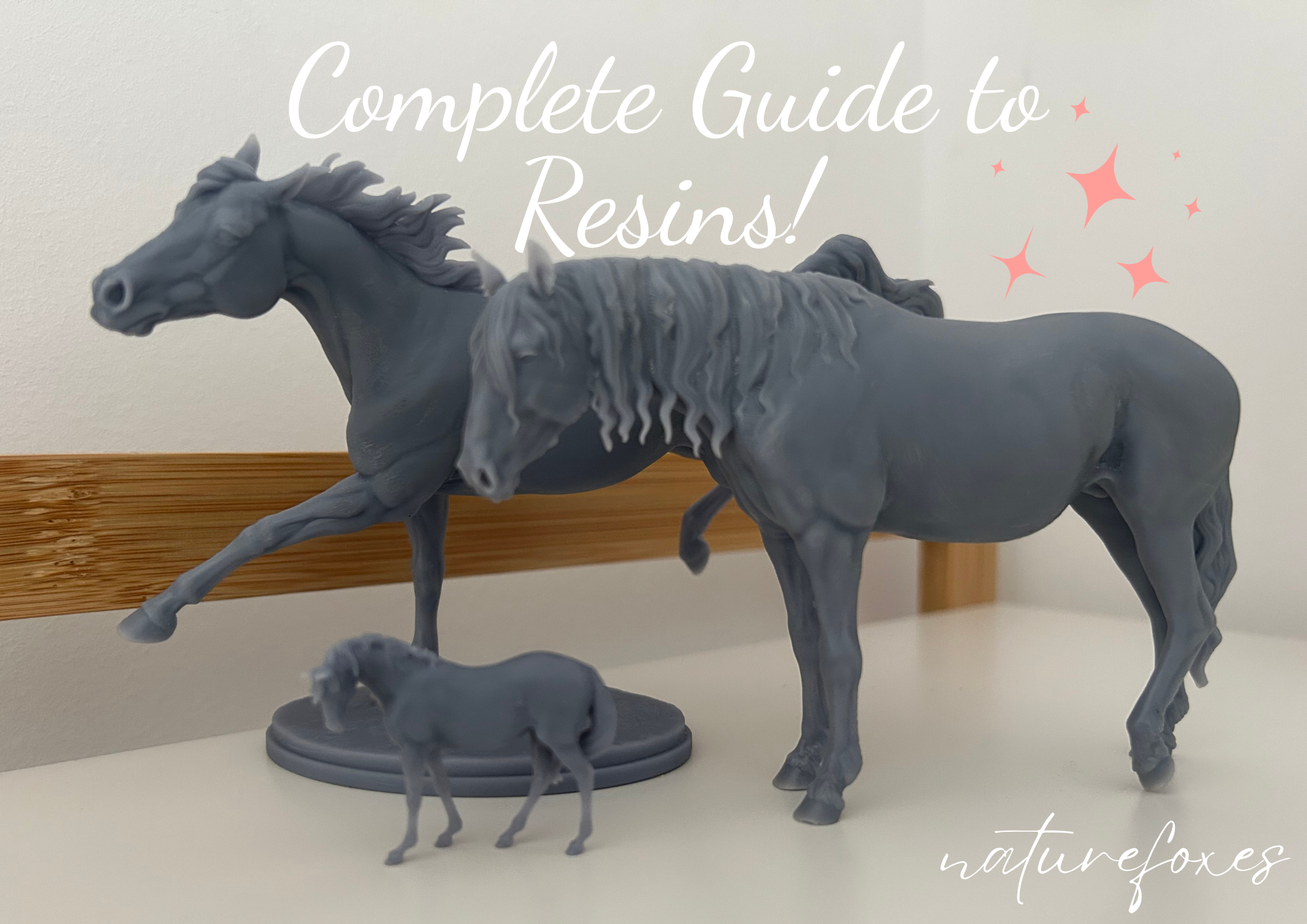
Hello everyone!
Recently I have received my second resin model horse order and I realized that for first timers, choosing a seller, looking at molds, choosing print type, and dealing with mold sizes is challenging. So today, I want to go over what I’ve learned about shopping for resin model horses so the process becomes easier for you and give an over all guide to resin model horses. Let’s get started!
What are resin model horses?
Resin model horses are models that have generally been digitally sculpted by professional artists and then cast in resin or other materials for a more detailed horse. These models are typically more expensive and harder to come by, targeted towards dedicated collectors and customization artists who want to invest in high quality, detailed models, by famous artists.
Kinds of resins, artist resins, casts, 3D resins, 3D prints, FDM printing… oh my goodness where do I start?
It’s important to know the difference between all these kinds of model horses so you can filter out ads for things you are not interested in and better understand what you are purchasing or looking at purchasing.
Artist Resins
The term artist resins refers to horses which have been sculpted by artists either by hand or digitally and then been duplicated via cast or resin print.
3D resins vs cast:
A 3D resin is a resin model horse which has been printed using a resin 3D printer (do not confuse with normal 3D printer, see below) the printer receives and analyses a digital sculpt of the horse and then pours resin in the desired shape using supports. The horses can be printed hallow or full, depends on seller however they are generally full up to a certain scale (size). The supports get separated from the model and it is then ready for customization.
A resin cast refers to a physical mold created after the originally sculpted horse which then gets filled with resin. After it is cured the cast/ mold is separated and the model has been duplicated. The original horse sculpted by the artist is rarely salvaged and may get destroyed or broken, however now the cast can be filled however many times the model needs to be duplicated. The word “cast” can also refer to a batch. So be careful in what way you see it used; cast as in mold that gets filled with resin, or “the first cast” = first batch, this cast, this mold, this individual horse. Hope this is clear enough!
FDM printing are 3D printed models made of high quality plastic that gets placed in layers which fuse together and create the sculpture. They are sturdy models, typically stronger than resins. This method is used for larger model horse scales (sizes) as the plastic can not transcend detail as precisely.
But what are normal 3D prints? They are not what you are looking for when shopping for model horses. They are simply printed plastic horses using a 3D printer. They are lower quality, cheaper, and not printed as well. The printed plastic can not show the details of the horse as well as resin does.
Protection!!!
Resin comes in many different forms. It is a very dangerous medium to work with and it is very toxic. Although most resin is harmless when cured, during the customization and prepping stage we may need to sand off bits of resin which are harmful if breathed in, ingested in any way, or get into your eyes, so you should ALWAYS wear proper protection gear, gloves, respirator mask, and glasses when sanding resin. Any kind of resin.
Different types of resin:
Model horses are cast in many different kinds of resin, some examples include UV resin kinds, ABS resin, and Polyurethane (PU) casting resin. Check the product description to verify what kind of resin the particular seller uses so you understand what you will be receiving.
What makes a good resin model horse seller?
Look for sellers who have made previous sales, work with renown artists, and have high quality products. It is best to find someone experienced in working and selling resins who understand the model horse community and is open to communication and safe shipping of the models.
Sizes.
I would love to say it’s easy to chose what scale of resin model horse to buy. But it really isn’t. Even more than normal model horses, resin sellers tend to make up their own scales or definitions of the standard scales. What is 1:24 for one seller may actually mean 1:20 for another, and 1:16 for another. Read the description carefully and or scale size chart if available to see what each seller understands as being 1:24 or 1:18. Reviews from previous customers are also a good indicator of scale accuracy. I have put together a general guide to model horse scales that contains what most people would go by. You can find my post here: https://naturefoxes.com/blog/explaining-model-horse-scales-what-are-they-and-how-do-they-work-diagram-included?rq=model%20horse%20scales
Choosing Models!
Finally choosing your model horse is totally up to preference! Choose what you like and suits your needs. Keep in mind that the resins may look slightly different in real life than in pictures, so if possible, find someone who owns models from that seller, so you can see what they look like on video or customer review pictures.
Thank you for reading! I hope this gave you a better understanding of model horse resins and clarified any questions! If you think I can be of further help or would like to reach out, you can email me at contact@naturefoxes.com I do my best to reply as soon as possible!
Other posts: https://naturefoxes.com/blog
Custom model horses for sale: https://naturefoxes.com/shop
Youtube: https://www.youtube.com/@naturefoxes_IrinaS
