
Pastels 1o1, What I've Learned
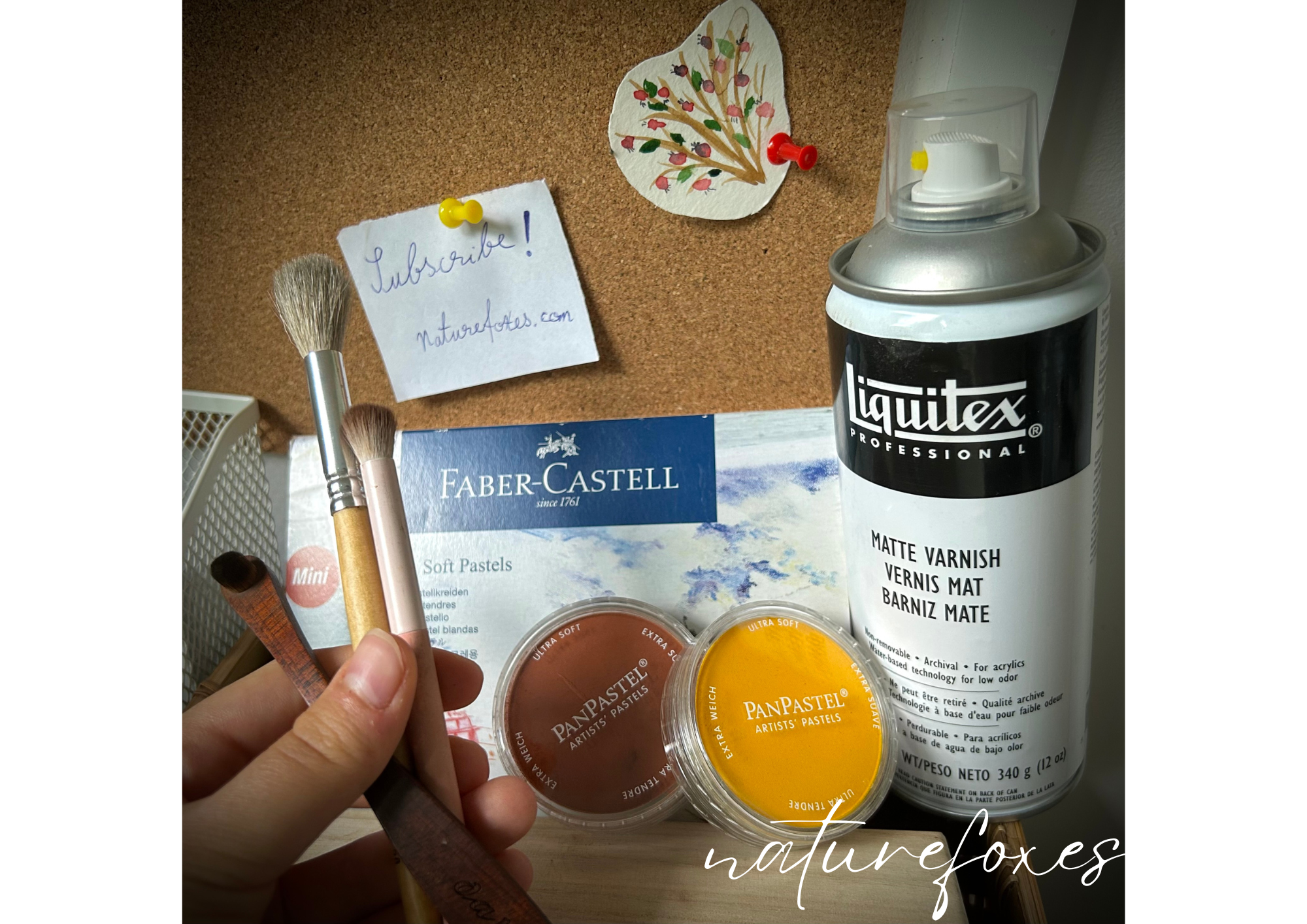
Pastels are difficult to work with, they are a fine, colorful pigment that requires many coats of sealant in between each layer. Yet, they are the fundamental tool of so many model horse artists. Since I became a model horse artist, I have picked up on a lot of things that make pastels apply better, and how to use them properly.
The first thing everyone should know is that you need to wear gloves when applying the pastels. If you hold your model without gloves, the serum on your skin will damaged the pastel layer and can cause grain. It doesn’t matter if you wash your hands.
Speaking of grain, let’s explain what it is for those who are new: it’s when the pastel clusters up in clumps, “grains”, and leaves a strange texture, often remaining on the surface and not covering the coat texture entirely. It can also show its affects after the sealant if the spray’s composition interferes with the pastels. I’ve found that the best way to avoid it is actually the way we brush our pastel onto the model. A rotational movement of the makeup/ pastel brush can cause the pastel to grain while simply dabbing the brush can have better results. Note: This works best with very soft pastels like PanPastel, one of the best brands. A harder kind of pastels is much more difficult to deal with, and causes grain more often.
Placing down a piece of paper on your work surface helps catch excess powder and allows you to slide the remaining into a spare container for later use.
Using an applier, (the small plastic sticks with fluff at the end used by dentists), is the best way to get detailed dapples on model horses :D
When using pastels over a base acrylic layer, lighter pigments like white will become very transparent once sealed. It is better to always work from light to dark by adding shadows and allowing the base layer of pastel to be the highlights. Unless you’re aiming for the cool ghostly effect, I would not recommend doing it the other way around.
Thank you for reading! Until next time!
By signing up to my newsletter, you get notified in advance when promotions and new releases are one the way!
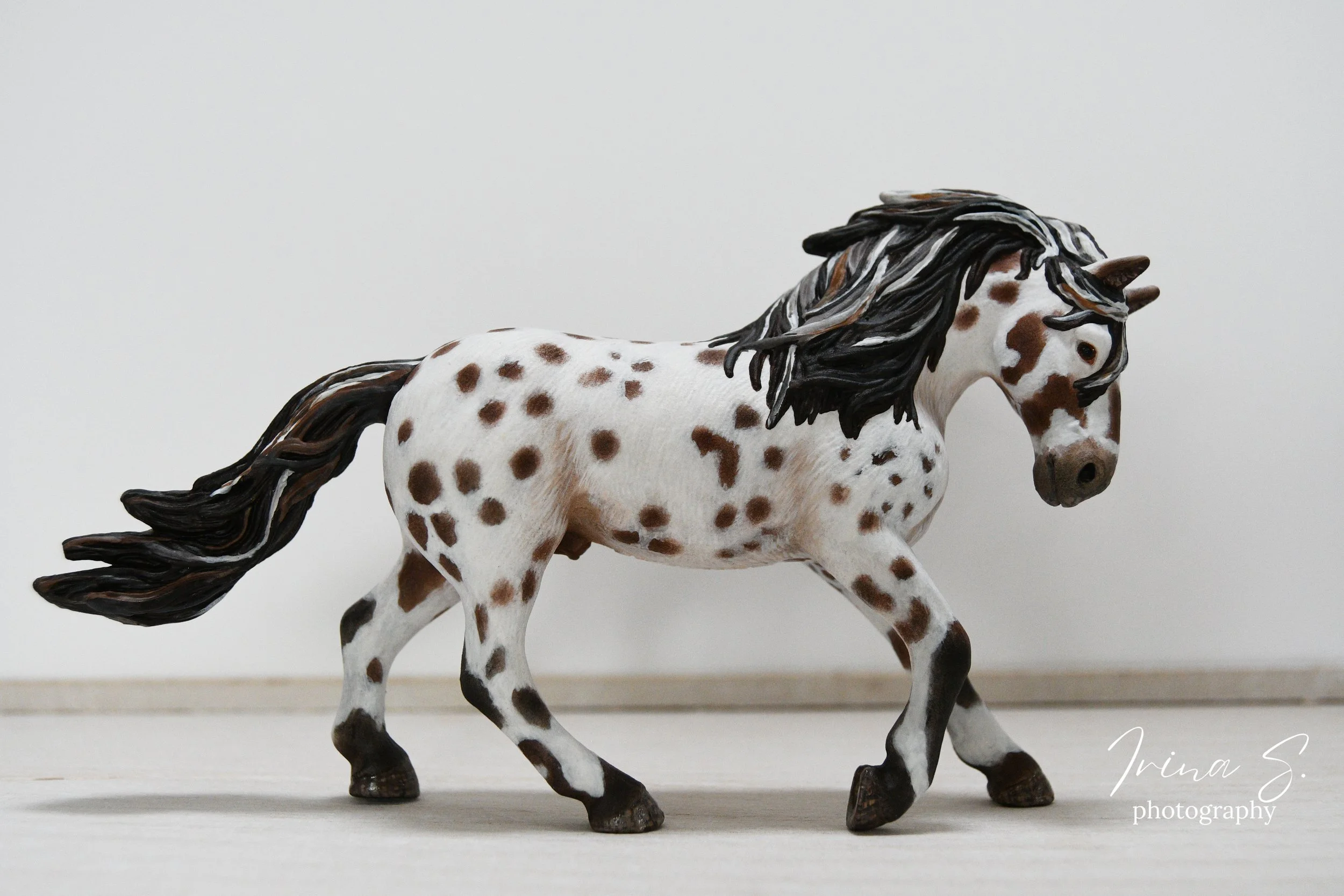
Custom Schleich model horse to Bay Leopard Appaloosa OOAK model horse custom
READ CAREFULLY!
This Schleich model horse has been completely hand-customized by myself to have a bay leopard appaloosa coat color. He is a completely original and one of a kind (OOAK) model horse. After going through the prepping stage, it was customized using acrylic paint and pastels, and was then sealed with matte varnish spray. The eyes, hooves, corners of the mouth, nostrils, and muzzle details of the horse have been glossed. The model has very detailed muzzle, eyes, and ears. My signature is painted on the belly of the horse (refer to picture). The horse is in 1:24 scale, the standard scale of Schleich horses. If you are unsure of what scales are, check out my blog post where I give an overview of model horse scales: https://naturefoxes.com/blog/explaining-model-horse-scales-what-are-they-and-how-do-they-work-diagram-included
This model horse was painted with extreme care and detail however minor flaws may occur and show quality is not guaranteed.
All models come with their certificate of authenticity stating they are a one of a kind custom by me, Irina Stanculete.
Shipping - DHL Express Shipping
CARE INSTRUCTIONS + DISCLAIMER:
Handle with care! This is a collector's item and was not intended for rough play. The model can be rinsed in water but it is NOT 100% waterproof and should not be left in water for long periods of time. Do not leave the model in extreme heat or cold.
